Sofia Sullivan · 19 October 2026
Academic Partnerships Fuel Software Trials Linking Pixel Archives to Visual Literacy Advances
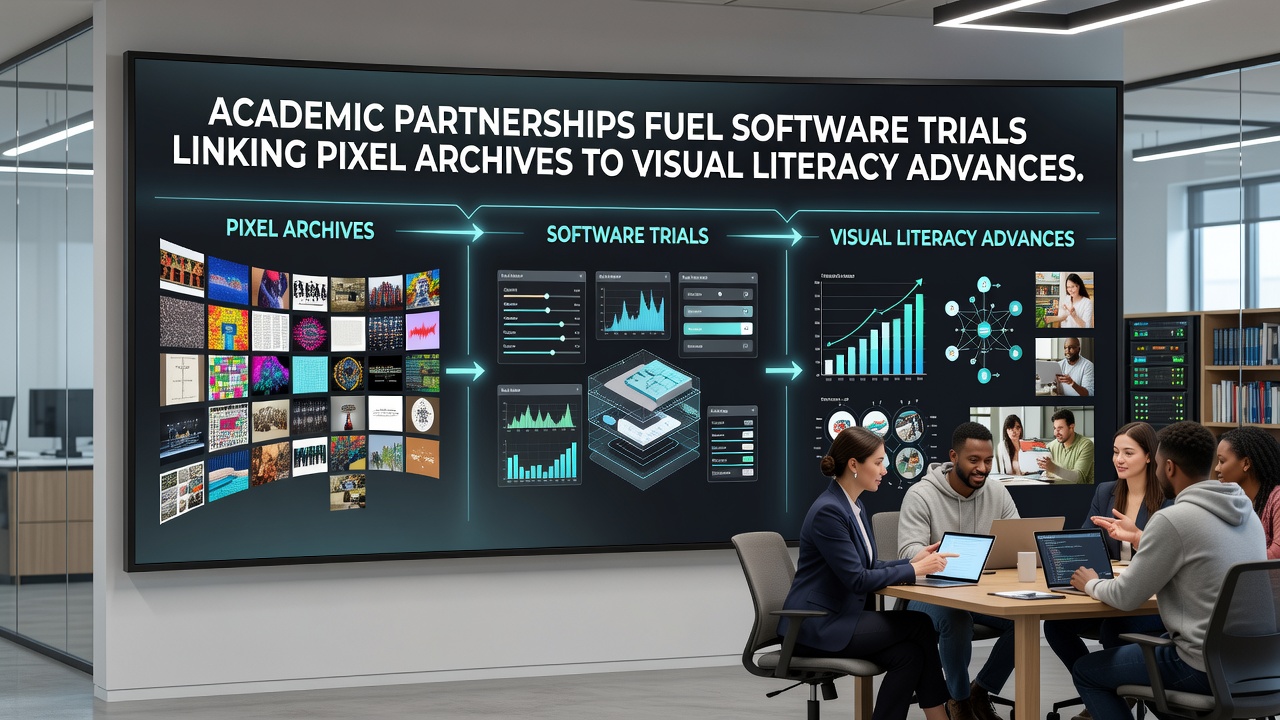
Academic institutions across multiple continents have formed partnerships with software developers to run targeted trials that connect detailed pixel archives with structured visual literacy training modules, and these efforts have produced measurable shifts in how students analyze digital imagery. Data from ongoing projects shows that access to archived pixel-level datasets allows participants to trace color gradients, compression artifacts, and resolution patterns that directly influence comprehension of visual messages.
Partnership Structures and Trial Design
Universities in North America, Europe, and Asia have established joint frameworks where faculty members supply curriculum requirements while technology teams supply the archive access tools, and this division of labor has accelerated the rollout of prototype platforms. One collaboration between a Canadian research university and a European imaging firm produced a trial platform in October 2026 that let students query pixel archives containing over 2.3 million historical photographs while receiving real-time feedback on their interpretations of composition and context.
Trials typically last eight to twelve weeks and incorporate pre- and post-assessments that track changes in students' ability to identify manipulation techniques, lighting inconsistencies, and cultural references embedded in images. Researchers note that the integration of archive queries into daily exercises has increased retention rates for visual analysis concepts by measurable margins compared with traditional lecture formats.
Pixel Archive Integration and Technical Features
Software developed through these partnerships indexes each image at the individual pixel level, enabling users to isolate specific color channels or compare compression histories across decades of archived material. Participants learn to recognize how subtle pixel variations signal editing interventions or original capture conditions, adn instructors report that this granular approach strengthens the connection between technical understanding and interpretive skills.

October 2026 saw the addition of collaborative annotation layers that let multiple users mark pixel regions simultaneously, and early usage logs indicate that group annotation sessions produced higher accuracy scores on follow-up identification tasks. The platform also logs every query against the archive, creating datasets that curriculum designers later use to refine exercise difficulty and topic sequencing.
Measured Outcomes in Visual Literacy
Assessment results collected during the trials reveal consistent gains in students' capacity to decode complex visual narratives, and these gains appear across age groups from secondary school through postgraduate levels. Figures released by participating institutions show average score improvements of 18 to 24 percent on standardized visual literacy rubrics after eight weeks of archive-supported practice.
Programs in Australia have linked their trial platforms to national digital literacy benchmarks maintained by the Australian Curriculum, Assessment and Reporting Authority, allowing direct comparison of participant performance against broader population data. Similar alignments have occurred with European frameworks that emphasize media analysis competencies, and cross-regional comparisons are now underway to identify which archive features yield the strongest transfer of skills.
One study conducted at a participating U.S. institution tracked how students applied pixel archive techniques when evaluating news imagery, and the results indicated faster detection of altered content compared with control groups using conventional search tools. These findings have prompted additional trials that extend the same methods into professional development courses for journalists and educators.
Future Expansion and Resource Allocation
Funding agencies have responded to the initial trial data by directing resources toward expanded archive access and multilingual interface development, and several new partnerships are scheduled to begin in late 2026. Observers note that the combination of academic oversight and commercial development cycles has produced stable platforms capable of handling simultaneous access by thousands of users without performance degradation.
Institutions continue to collect longitudinal data that will clarify how early exposure to pixel-level analysis influences later academic performance in fields that rely heavily on visual communication. The October 2026 trial cohort is expected to provide the first complete dataset spanning an entire academic year, and preliminary indicators suggest sustained benefits that extend beyond the immediate training period.
Conclusion
Academic partnerships have established repeatable models for connecting pixel archives with visual literacy instruction, and the October 2026 trials have supplied concrete evidence of skill improvements across diverse learner populations. Continued data collection and cross-institutional sharing are expected to refine these approaches further while maintaining focus on measurable educational outcomes.