Rosa Lang · 2 November 2026
Student Pixel Manipulation Experiments Highlight Shifts in Visual Processing Across Regional Labs
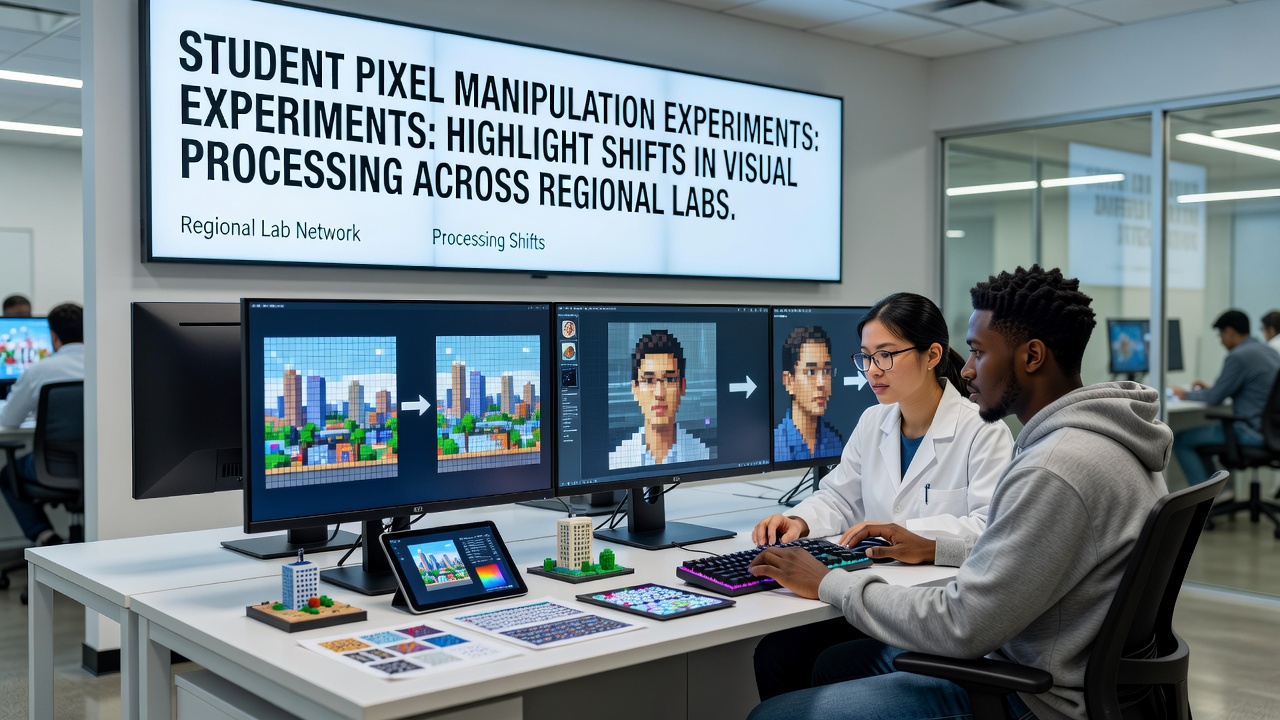
Regional laboratories have expanded student-led projects that alter pixel structures in digital images, and these efforts now track measurable changes in how participants process visual information. Data collected through controlled trials show adjustments in eye-tracking patterns along with shifts in brain activity recorded via functional imaging, while November 2026 updates from multiple sites confirm consistent trends across different age groups and geographic areas. Researchers coordinate protocols that standardize pixel density modifications yet allow local teams to adjust variables such as color channel emphasis or spatial frequency filters.
Setup of Coordinated Lab Networks
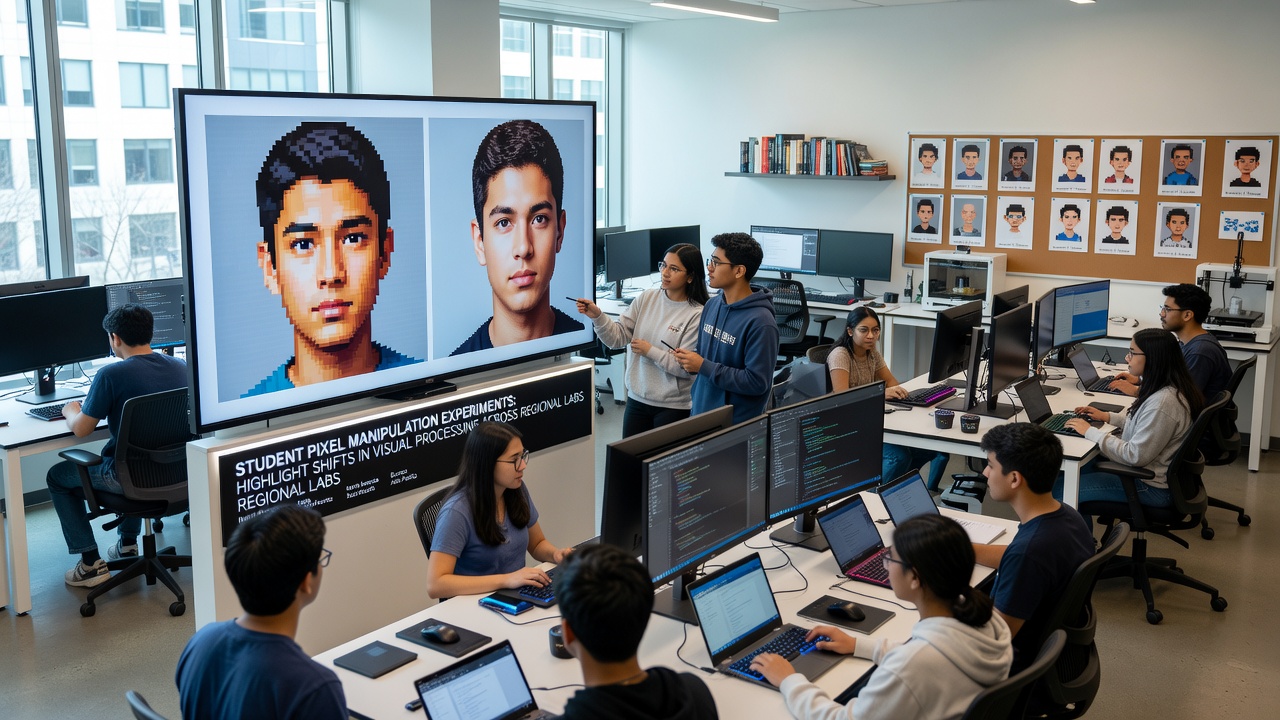
Universities and independent research centers form loose networks that share raw datasets without merging administrative structures, so each site maintains its own equipment calibration routines while feeding anonymized results into a central repository. One cluster operating in North America focuses on high-resolution displays paired with eye-movement sensors, whereas a parallel group in Central Europe emphasizes lower-resolution mobile screens to replicate everyday viewing conditions. Observers note that these differences help isolate whether hardware constraints influence the observed visual processing adaptations.
Training sessions for student participants begin with baseline tests that measure reaction times to standard image sets, then progress to manipulation tasks where individuals adjust pixel values under guided constraints. Sessions last between forty-five and ninety minutes, and follow-up assessments occur at twenty-four-hour and one-week intervals to capture both immediate and retained effects. Figures from the shared repository indicate participation rates above seventy percent across all listed sites during the most recent cycle.
Recorded Changes in Visual Processing
Eye-tracking logs reveal that participants who complete multiple manipulation rounds spend less time fixating on high-contrast edges compared with control groups, while fMRI subsets show reduced activation in the ventral visual stream during post-test viewing. These patterns hold across samples drawn from different regions, although the magnitude varies slightly with the average daily screen exposure reported by each cohort. Studies indicate that students who previously worked with analog media demonstrate slower adaptation rates than those already immersed in digital environments.
Additional metrics track color discrimination thresholds and motion detection accuracy, both of which register incremental gains after the experiment series concludes. Researchers attribute the gains to repeated practice with pixel-level decisions rather than to any single hardware variable, since similar outcomes appear whether trials use desktop monitors or tablet devices. The November 2026 data release includes longitudinal tracking for a subset of participants who returned for repeat sessions six months later, confirming that several adjustments persist beyond the initial training window.
Regional Differences and Shared Protocols
North American sites report stronger shifts in motion sensitivity, while European counterparts document more pronounced changes in fine-detail discrimination, differences that align with the distinct display technologies each group employs. Despite these variations, core statistical models applied to the pooled dataset show overlapping confidence intervals for overall visual processing speed. Teams therefore continue to refine shared calibration standards so future comparisons can isolate cultural or environmental factors more precisely.
Student teams contribute to protocol tweaks by logging unexpected interface behaviors during sessions, and these notes feed into quarterly review meetings held via secure video platforms. One documented adjustment involved increasing the granularity of pixel value sliders after participants at an Asian partner lab reported difficulty achieving intended contrast levels. The change improved task completion rates without altering the underlying research questions.
Links to Broader Research Efforts
Findings connect with ongoing work at institutions that study perceptual learning, including projects supported by the National Eye Institute and parallel investigations coordinated through the Max Planck Society. Both organizations maintain public repositories that list related publications on pixel-based stimuli and their effects on visual cortex activity, allowing cross-referencing without direct collaboration between the student labs and these larger entities.
Conclusion
Student pixel manipulation experiments continue to generate comparable datasets from dispersed regional labs, and the accumulated records point to reliable shifts in several dimensions of visual processing. November 2026 summaries reinforce earlier patterns while highlighting minor regional distinctions that future protocol refinements aim to clarify. The approach keeps student researchers at the center of data collection and analysis, sustaining an expanding record of how targeted pixel adjustments translate into measurable perceptual changes.